
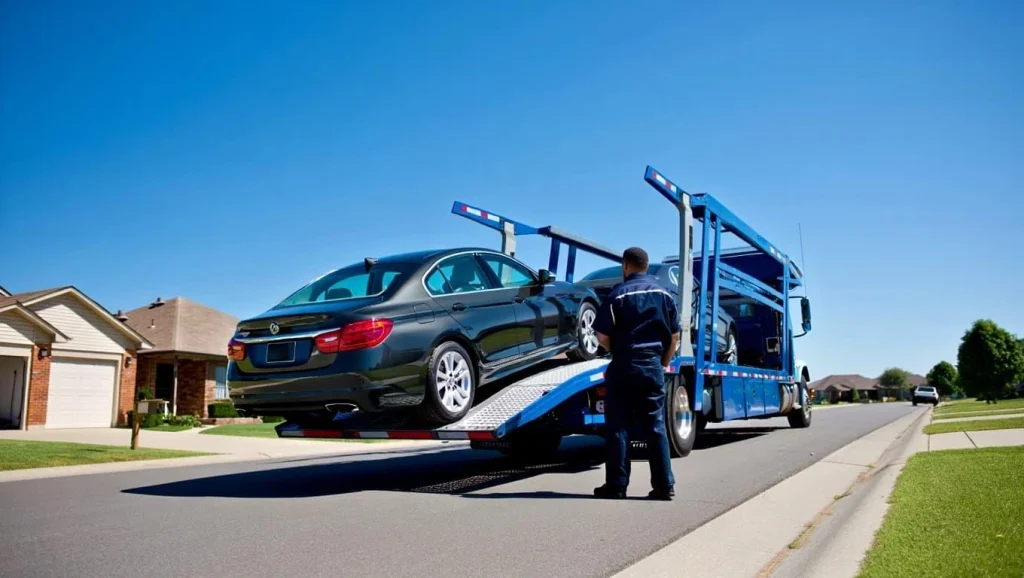
Choosing between open and enclosed car transport is an important step when arranging vehicle shipping. Both options can move a vehicle from one location to another, but they differ in trailer design, exposure to outside conditions, and suitability for particular vehicles.
If you are shipping a car from Los Angeles, California, to another city or state, understanding these differences can help you choose an option that matches your needs.
What Is Open Car Transport?
Open car transport involves moving vehicles on an open trailer rather than inside an enclosed trailer. It is a widely used method for transporting everyday cars, SUVs, and other compatible vehicles.
Because the vehicle travels on an open trailer, it is exposed to outdoor weather conditions and road debris during transit.
Benefits of Open Car Transport
A practical option for everyday vehicles
Open transport is commonly considered for standard vehicles used for commuting, family transportation, and daily activities.
Broad availability
Open trailers are widely used in the auto transport industry. Availability for a particular route, vehicle, and date still depends on carrier capacity and scheduling.
Potentially lower transportation costs
Open transport often costs less than enclosed transport because of differences in equipment and operating expenses. Actual pricing depends on the route, vehicle size, timing, pickup and delivery requirements, and market conditions.
What to Consider
Open transport does not provide the same physical enclosure as an enclosed trailer. Your vehicle may encounter rain, dust, road grime, and other outdoor conditions.
For many owners of standard vehicles, this exposure is an acceptable trade-off for the practicality of open shipping.
What Is Enclosed Car Transport?
Enclosed car transport moves vehicles inside a covered trailer. The enclosure provides an additional barrier against direct exposure to weather and road debris.
This option may be suitable for classic cars, collectible vehicles, luxury automobiles, exotic cars, or vehicles whose owners prefer additional protection during transit.
Benefits of Enclosed Car Transport
Additional protection from outside elements
The enclosed trailer helps shield the vehicle from direct exposure to rain, dust, and road debris while it is inside the trailer.
A suitable option for certain valuable vehicles
Owners of classic, collectible, or specialty vehicles may prefer enclosed transportation because the condition of their vehicle is particularly important to them.
A more controlled transport environment
An enclosed trailer creates a different transportation environment from an open trailer. However, the specific equipment, loading process, and handling procedures depend on the carrier.
What to Consider
Enclosed transport typically costs more than open transport. Enclosed carriers may also have different availability and scheduling requirements.
Before booking, discuss the vehicle’s dimensions, ground clearance, modifications, and any special loading requirements.
Open vs. Enclosed Transport: Key Differences
Vehicle Exposure
Open transport leaves the vehicle exposed to outdoor conditions. Enclosed transport places the vehicle inside a covered trailer, providing an additional barrier against weather and road debris.
Cost
Open transport is often the more economical choice. Enclosed transport generally has a higher price because of its specialized equipment and operating costs.
Vehicle Suitability
Open transport is commonly used for standard cars and everyday vehicles. Enclosed transport may be preferred for classic cars, specialty vehicles, and automobiles whose owners want additional protection.
Availability
Both options depend on the route, vehicle requirements, timing, and carrier availability. Enclosed transportation may have fewer suitable options for certain routes or dates.
Personal Preference
The best choice is not necessarily the most expensive one. Consider your vehicle’s value, condition, intended use, budget, and tolerance for outdoor exposure.
Which Option Is Best for Your Vehicle?
Open transport may be a sensible starting point if you are shipping a standard daily-use vehicle and want to compare practical transportation costs.
Enclosed transport may be worth considering if you own a collectible car, a specialty vehicle, or an automobile for which reducing direct exposure to outside elements is a priority.
If you are uncertain, describe your vehicle and route to the transport provider. Ask about trailer suitability, estimated scheduling, pricing, loading requirements, and the applicable insurance arrangements.
Factors That Affect Auto Transport Pricing
Regardless of which method you choose, several factors can influence the cost of shipping a vehicle.
- Distance: Longer routes generally involve greater transportation costs.
- Vehicle size and weight: Larger vehicles may require more trailer space.
- Pickup and delivery access: Difficult locations may require an alternative meeting point.
- Timing: Requested pickup dates and seasonal demand can affect pricing.
- Vehicle condition: Inoperable vehicles may require specialized equipment.
- Transport type: Enclosed transportation generally costs more than open transportation.
Request a quote based on your specific vehicle and route rather than relying only on a general price estimate.
Choosing an Auto Transport Provider
Before confirming an arrangement, review the transportation terms, cancellation policy, pickup and delivery expectations, payment requirements, and carrier information.
If a broker is involved, clarify its role and identify the carrier responsible for transportation. Ask for the applicable insurance details and instructions for reporting any vehicle damage.
Clear answers make it easier to compare providers and understand the service you are purchasing.